
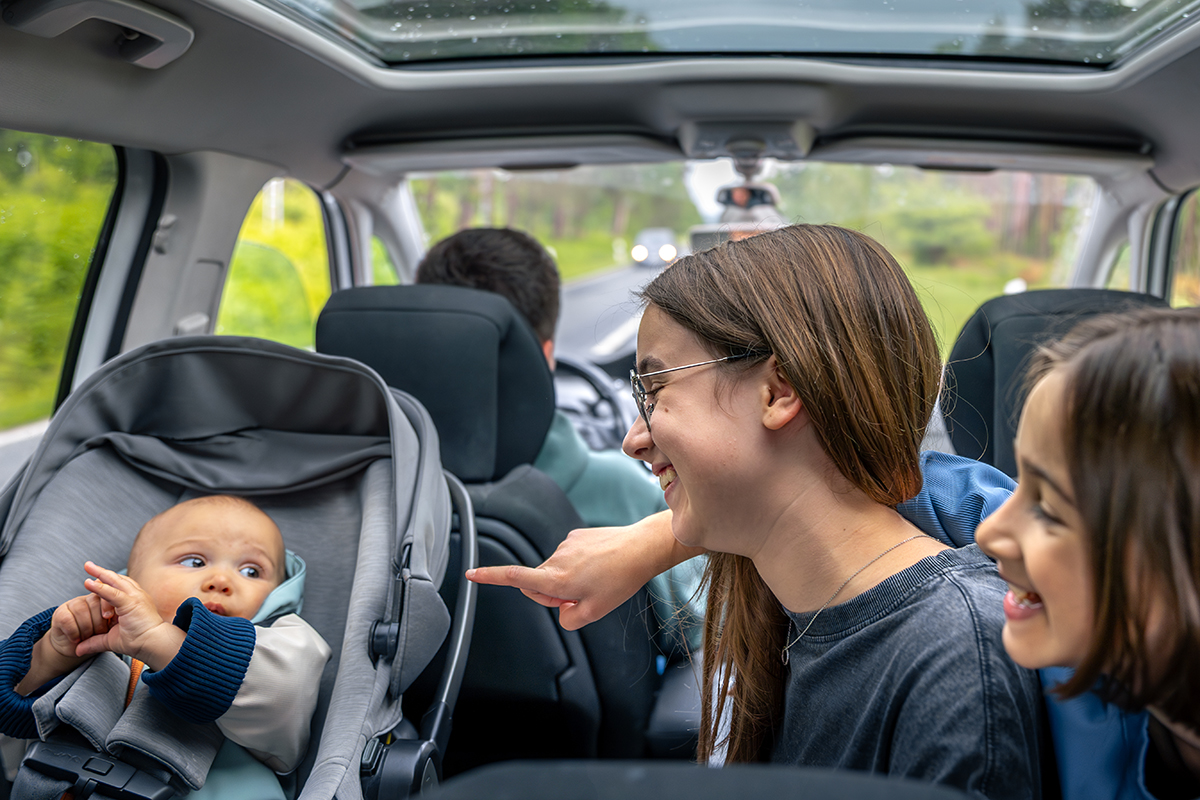
Bringing your newborn home from the hospital is a momentous occasion, and their safety on the journey is paramount.
As a new parent, navigating the world of car seats and road safety can feel daunting.
This guide provides essential, clear advice to ensure your most precious passenger is protected from their very first trip.
The Absolute Rule: The Correct Car Seat
This is non-negotiable.
Your baby “must” travel in a rear-facing baby car seat that conforms to the Europe safety standard.
Look for the “UN ECE Regulation 44.04” or the newer “R129 (i-Size)” label.
It is illegal and extremely dangerous to hold a baby in your arms or use any other restraint in a vehicle.
- Choosing the Right Seat:
- Group 0+ Seats:
These are specifically designed for newborns and are suitable from birth up to 13kg (approx. 12-15 months). They are rear-facing and often come with a carry handle and can integrate with a compatible pram (travel system). - i-Size Seats:
The newer R129 regulation is based on a child’s height rather than weight.
An i-Size seat suitable from 40cm to 105cm will accommodate a newborn and keep them rear-facing for much longer, which is significantly safer
- Group 0+ Seats:
- Installing the Car Seat Correctly
A car seat is only safe if it’s fitted perfectly. Always, always follow the manufacturer’s instructions to the letter.- Isofix:
This is the gold standard. Isofix points are metal bars built into the car’s chassis between the seat back and cushion.
An Isofix car seat clicks directly onto these points, creating a rigid and incredibly secure connection.
If your car and seat are Isofix-compatible, use this system. - Seat Belt Fit:
If you are using the car’s seat belt to secure the seat, ensure the belt path is followed exactly as shown in the manual.
Pull the belt tight so there is no slack.
The seat should not move more than an inch side-to-side or forwards when pushed firmly at the belt path. - Position:
The safest place for a baby’s car seat is on the “rear passenger seat”.
If you must fit it in the front passenger seat, you “must” deactivate the airbag for that seat.
The force of an airbag deploying can be fatal to a rear-facing child.
Consult your vehicle handbook for instructions.
- Isofix:
- Harnessing Your Baby Safely
A car seat is only safe if it’s fitted perfectly.
Always, always follow the manufacturer’s instructions to the letter.- Harness Height:
The shoulder straps of the harness should emerge from the seat “at or just below” your baby’s shoulders. - Snug Fit:
The harness should be tightened so that you cannot pinch any of the webbing strap horizontally between your thumb and forefinger. It needs to be snug against their body. - Remove Bulky Clothing:
Before strapping your baby in, remove thick coats, snowsuits, or padded suits. In a crash, this padding compresses, creating dangerous slack in the harness. Instead, buckle them in snugly and then place a blanket over them for warmth.
- Harness Height:
- The Journey Itself
- Plan for Breaks:
Newborns should not be in a car seat for prolonged periods.
Plan long journeys to include breaks every 60-90 minutes where you can take your baby out of the seat to feed, change them, and allow them to stretch and lie flat.
This is important for their breathing and spinal development. - Never Unbuckle While Moving:
Even if your baby is crying, never be tempted to take them out of their harness while the car is moving.
Safely pull over first. - No Loose Objects:
Ensure all bags, toys, and other items are securely stored in the boot or footwell. In the event of sudden braking, loose items become dangerous projectiles.
- Plan for Breaks:
- Outside the Car
- Pram Integration:
If you have a travel system, ensure the car seat clicks securely into the pram chassis.
Always use the safety strap as an extra precaution. - Never Leave Alone:
You should never, under any circumstances, leave your baby unattended in a car.
Temperatures can rise to dangerous levels incredibly quickly, leading to heatstroke and fatal consequences.
- Pram Integration: